A safe dementia admission involves more than allocating a room: staff need a medical baseline, a personal history, and a plan for daily risks and preferences. By the end, you will know what happens from the first family enquiry through routine care, urgent escalation, review, and transfer or discharge.
Key takeaways
- Ask for a pre-admission assessment and documented medical history.
- Check that care plans include routines, triggers, risks and review dates.
- Look for calm responses to distress, wandering and changing behaviour.
- Visit during an ordinary day to observe dementia support in practice.
What happens before a resident with dementia is admitted?
Admission begins with a pre-admission assessment, not a room assignment. This is the starting point for the dementia care process in Bavdhan: the center decides whether it can safely meet the resident’s needs and establishes a baseline for later comparison.
1. A nurse or care coordinator speaks with the resident and family about the dementia diagnosis, stage, symptoms, language, former occupation, sleep pattern, food preferences, faith, routines, interests and personal-care choices.
2. Staff assess cognition, communication, mobility, fall risk, continence, nutrition, swallowing, sleep, pain, mood, behaviour, vision, hearing and wandering risk. They document how the resident manages washing, dressing, toileting, eating and medicines.
3. The family supplies the current medicine list, allergies, emergency contacts and previous care records. The neurologist, geriatrician or general practitioner contributes diagnoses, treatment plans, recent test results and warnings; a previous facility adds information about incidents, triggers and successful approaches.
4. Before arrival, staff record the baseline, preferred communication method, mobility support, dietary needs, supervision level, known risks and clinician contacts in the admission file. They also agree how the family will be contacted about deterioration, falls or hospital transfer.
A sudden change in confusion, walking, alertness or behaviour is not automatically labelled dementia. Staff must check for pain, infection, dehydration, constipation, medicine effects or delirium and arrange urgent medical assessment for serious symptoms.
How is the initial care plan built and reviewed?
The first care plan is a baseline, not a room assignment. In an elderly care center, dementia diagnosis and stage are reviewed alongside the resident’s current abilities, risks and preferences.
A clinician reviews records from the neurologist, geriatrician, general practitioner or previous facility. Nurses and carers observe daily function, while family members explain personal history, language, former routines, food preferences, faith, occupation and emergency contacts. The process in Bavdhan should record:
- Mobility, walking aids and falls history
- Continence, toileting needs and urinary retention risk
- Appetite, weight, hydration, nutrition and swallowing
- Sleep pattern, communication ability, vision and hearing
- Mood, behaviour, pain, wandering and distress triggers
- Every medicine, dose, timing, recent change and possible side effect
Staff then turn these findings into practical actions: supervision levels, meal texture, toileting prompts, communication methods, activities, safe movement and clinician follow-up. They record sleep, appetite, continence, mobility, mood, incidents, activities and medicines during the first weeks, when relocation can increase anxiety, disorientation, dehydration, falls or poor sleep.
Consistent carers and familiar belongings help reveal the resident’s usual pattern.
A sudden change is not labelled dementia progression without checking. New confusion, unusual sleepiness, agitation, weakness or loss of function can indicate delirium caused by infection, dehydration, constipation, pain, urinary retention or medicine effects.
Staff seek prompt clinical assessment, with emergency escalation for head injury, breathing difficulty, chest pain, choking, repeated falls, severe dehydration or reduced consciousness. This is the essential elderly care center dementia for process in Bavdhan.
What do dementia routines look like during an ordinary day?
A predictable pattern reduces confusion, but dementia routines in Bavdhan should flex around the resident rather than force everyone into one timetable. Staff use the person’s former habits, language, food preferences, faith, occupation, sleep pattern and best time of day to decide when and how care is offered.
1. The day starts with a calm greeting, eye contact and a short sentence: “Good morning. Toileting now.” Staff offer one step at a time during washing, dressing and toileting, using visual prompts, familiar objects and limited choices.
They explain each action before touching; avoid touch when the resident appears frightened, pulls away or does not understand, then try again later. A steady, respectful tone matters more than speed.
2. Meals include familiar foods, visual choices, supervision and enough time. Staff prompt drinking between meals, give medicines at the prescribed times, and watch for coughing, a wet voice or unusually long meals.
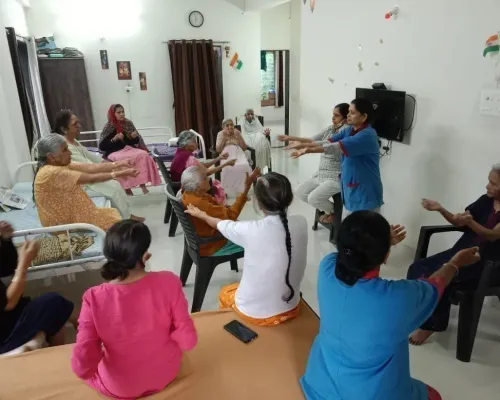
Walking, folding clothes, sorting objects, music, gardening or helping with meals can replace passive television; staff schedule these activities, outdoor time and rest when the resident is most alert, stopping if fatigue or frustration appears.
3. Evening care repeats the familiar sequence: toileting, washing, comfortable clothing, medicines, quiet conversation and a settled bedroom before bedtime. Staff reduce noise and explain each change, while recording appetite, fluids, sleep, continence and refusals so tomorrow’s routine can be adjusted.
How do carers respond to distress, wandering and changing behaviour?
A behaviour change is a care signal, not simply “difficult dementia”. Staff first look for pain, infection, dehydration, constipation, urinary retention, hunger, fear, fatigue, medication effects or overstimulation; a sudden change in confusion or alertness requires prompt assessment for delirium.
- Repetition or suspicion: answer calmly, avoid arguing, and redirect to a familiar object or meaningful activity.
- Agitation or refusal of care: use one-step instructions, quieter surroundings and reassurance; pause and try again instead of forcing the task.
- Night waking: check toileting, pain, hunger, thirst, fear and medication effects, then reduce noise and lighting hazards.
- Pacing or attempts to leave: guide the person towards a secure, uncluttered area with clear routes and supervision.
- Aggression or hallucinations: give space, remove the trigger, speak slowly and seek clinician review if the behaviour is new or worsening.
- Falls prevention: improve lighting, footwear, walking routes and observation without unnecessary restraint.
- Mealtime distress: offer assistance, allow extra time and report coughing, wet voice, pocketing food or repeated choking as possible swallowing problems.
- Head injury, sudden weakness, breathing difficulty, chest pain, choking, severe dehydration, uncontrolled pain, repeated falls or reduced consciousness: escalate immediately to the clinician and emergency services.
Staff record what happened, what preceded it and what helped. A clinician reviews suspected delirium, infection, medication problems or swallowing decline; residential support cannot replace acute medical assessment. Familiar belongings, consistent carers and meaningful daytime activity can also reduce distress after admission.
How should families judge an elderly care center’s dementia support?
To judge elderly care center dementia support in Bavdhan, ask how the center turns observations into decisions. Kartavya Old Age Home’s should be able to show who reviews each resident, what gets recorded, and how family knowledge about routines, language, food and behaviour informs care.
Ask these questions before agreeing to admission:
- Is there a dated written care plan covering cognition, mobility, falls, continence, nutrition, sleep, communication, mood, behaviour, pain, medicines, vision, hearing and personal preferences?
- Does one named clinician, such as a geriatrician or physician, take responsibility for reviewing the plan, and how often does that review occur?
- How are medicine decisions explained, including new prescriptions, dose changes, sedating drugs and the reason a medicine is stopped?
- Does the communication record track sleep, appetite, continence, mobility, mood, incidents, activities and medication changes rather than recording only emergencies?
- When will staff call you about deterioration, a suspected delirium, hospital transfer, a fall, choking or repeated falls?
- Who discusses end-of-life decisions, what wishes are documented, and how are you involved if the resident cannot decide?
Regular reviews should produce a clear outcome: updated care, transfer to hospital for acute illness, transfer to a higher-support setting when needs exceed residential capacity, or discharge when residential care is no longer safe or suitable. A vague promise to “monitor” is not a review process.
Related service
Old Age Care “We believe communicating effectively with someone with Alzheimer’s is not just about using language, it is connecting through their senses such as... View service → |
Frequently asked questions
What happens before a resident with dementia is admitted?
The center completes a pre-admission assessment, reviews medical and care information, identifies safety risks and confirms whether it can meet the resident’s needs.
How is a dementia care plan built and reviewed?
Staff use the initial assessment as a baseline, then record the resident’s routines, abilities, health needs, triggers and risks. They review the plan when needs or behaviour changes.
What do dementia routines look like during an ordinary day?
A routine usually covers waking, personal care, meals, medication, activity, rest and bedtime in a predictable sequence. Staff adjust support to the resident’s abilities and preferences.
How should families judge an elderly care center’s dementia support?
Ask how the center handles wandering, distress, changing behaviour, medication, emergencies, family updates and care-plan reviews. Observe staff interactions during a normal visit.